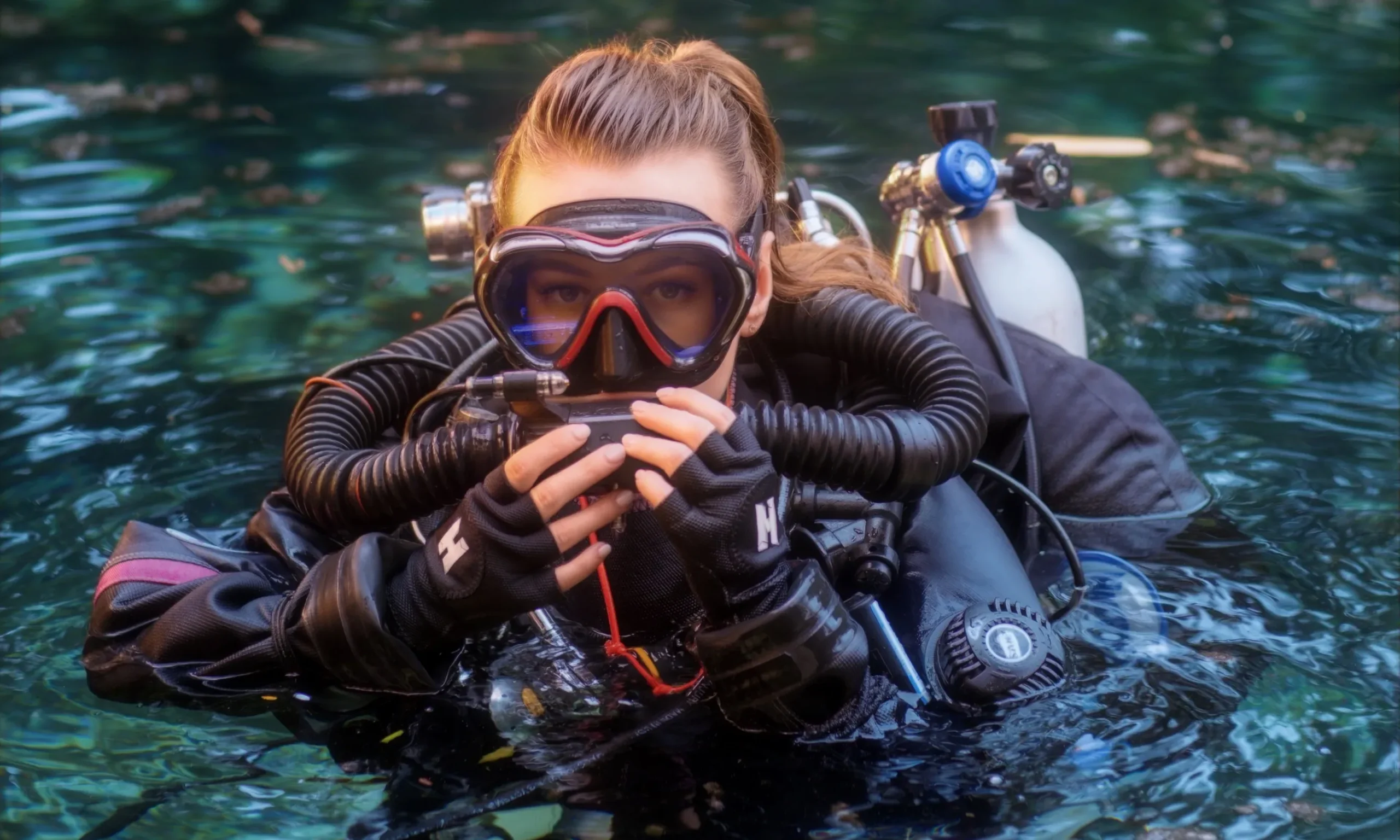
CCR Cave Diver course on your rebreather: GBM, S7, SF2, JJ or Fathom, 4 days, 6 dives
The CCR Cave course on the rebreather you already own: GBM, S7, SF2, JJ or Fathom. Sorb, oxygen, diluent and bailout are here. You bring the unit and your cave and CCR experience.
Why take the CCR Cave Diver course?
Venturing deeper into caves and discovering more passages may require more time for exploration and added safety redundancy. As an experienced open water CCR diver and avid cave diver, you will want the CCR advantages during cave explorations.
Who is it for?
The course gives experienced cave and closed-circuit rebreather divers the knowledge and practice they need. With it they safely use closed-circuit rebreathers in a cave environment.
What will I learn?
- Mastery-level skills, knowledge and procedures of the closed-circuit rebreather for the cave environment
- All CCR cave-specific skills. Bailout planning so that each team carries stages or bailout gas enough to bring at least one and a half divers to the surface. Bailout gas limits (PO2 no more than 1.6 at the MOD, END no deeper than 36 m)
How the CCR Cave course runs
- 4 days, at least 6 rebreather cave dives and at least 360 minutes of cave bottom time for divers already qualified as Rebreather Introductory Cave Diver. In at least three different caves, conditions allowing. Classroom lectures, land drills and in-water work. Playa del Carmen or Puerto Aventuras area; transfer from Playa del Carmen included.
- Other routes, days quoted during the order. Without the Rebreather Introductory Cave Diver rating: at least 10 rebreather cave dives and 600 minutes of cave bottom time. Crossover from open-circuit Cave Diver to CCR Cave Diver: at least 2 rebreather cave dives and 200 minutes of cave bottom time. Plus a confined water session.
- Rate: $398 per training day in a group of two or more, $448 individually.
Included: professional Advanced Technical Dual CCR Cave Diving instructor, hotel pickup and drop-off in Playa del Carmen, doubles or sidemount tanks with EAN32, weights, and the final examination
Not included: Students must bring their own tech/cave level diving gear (requirements will be provided) or rent it, Additional sets of Doubles or Sidemount tanks with EAN32, Stages, Drysuit tanks, Sofnolime, Oxygen, Trimix or Argon fills for both students and Instructor / DPV rental for students and Instructor / Cenote entry fee / Any Rental equipment will be charged accordingly, Foto/Video service, Diving insurance, Camera fee (depend on Cenote policy), Fuel or boat surcharges for remote locations out of Playa del Carmen and Puerto Aventuras areas (as per student request), eLearning materials or/and printed manuals, Certification fee ($60 per card), Tips for instructor
Applicants must
- Be qualified in CCR Advanced Nitrox Diver or higher, or equivalent, on the unit to be used. The CCR Advanced Nitrox or CCR Advanced Recreational Trimix course does not combine with the CCR Cave Diver course
- Hold the Rebreather Introductory Cave Diver rating or equivalent with at least 50 logged rebreather dives. Without it, at least 100 logged rebreather dives. For the crossover from open-circuit Cave Diver, at least 25 rebreather dives with 50 hours on the rebreather
- Be a minimum of 18 years of age
- Be physically and mentally fit and able to swim. Obtain a physician’s prior written authorization for prescription drugs or any medical condition that may pose a risk while diving
Equipment
Students must bring their own equipment per the list below or rent it from Cave Ha. Any rental equipment, including the S7 and GBM rebreather units, tanks, gases and sorb, is charged on actual usage. Students cover the cost of all gases and sorb used by the instructor, cenote entrance fees and certification card fees at $60 per card.
Cylinders per diver: 2 diluent/bailout cylinders AL80 DIN (sidemount or backmount doubles); 2 deco stage cylinders: 1 AL80 DIN and 1 AL40 DIN (oxygen).
Regulators and rigging
Regulators. Every regulator on the dive must be able to feed a rebreather: with two units in the water, every cylinder is a possible gas source for either unit. We recommend Swagelok QC6 connectors for diluent and QC4 for oxygen; standard 9/16 inflator connectors are acceptable.
- Diluent/bailout regulators, sidemount option: 2 regulator sets, each with DIN first stage, second stage, SPG, LP hose for the wing and drysuit, plus one LP hose with a QC6 (or 9/16) connector for the rebreather diluent port
- Diluent/bailout regulators, backmount doubles option: 1 technical regulator set with 2 DIN first stages, 2 second stages (long hose and necklace), SPG, LP hoses for the wing and drysuit, plus one LP hose with a QC6 (or 9/16) connector on each first stage for the rebreather diluent port
- 2 stage regulator sets for the deco cylinders, one of them oxygen-clean; each with an LP hose and connector for the rebreather: QC4 (or 9/16) on the oxygen regulator, QC6 (or 9/16) on the other
- Rigging: 2 sidemount rigging sets for the AL80 bailout cylinders if sidemount, 1 stage rigging set for the AL80 deco cylinder, 1 stage rigging set for the AL40
Exposure protection, harness and instruments
Exposure protection: 1 well-fitted drysuit with front-entry zipper, 2 pockets and 1 P-valve, plus 1 undergarment (Thinsulate 150 or equivalent); or 1 well-fitted wetsuit thick enough for 3-4 hours in 25 C water daily (5-7 mm preferred) plus tech shorts with 2 pockets; 1 thin neoprene hood; 1 pair of neoprene gloves, at least 1 mm.
Harness and buoyancy: the harness and wing of your rebreather, able to carry the unit, 2 bailout cylinders and 2 stages.
Instruments and accessories: 1 bottom timer or deco computer, independent of the rebreather electronics; 1 wrist-mounted compass; 1 primary light, canister type or handheld type; 2 backup lights; 1 pair of Jet fins; 1 primary mask plus 1 backup mask; 1 small cutting device (for the webbing harness); 3 to 4 safety/jump spools per person; 1 penetration reel (120 m) per team; 1 pigtail with at least 3 arrows and 8 cookies; 1 DSMB (closed type preferred); 1 wetnotes with pencil.
One set of doubles or sidemount tanks with EAN32 is included in the course price. Rental of the consumables and of additional sets: Sofnolime $20 per kg, oxygen 3 l $19, 40 cu ft doubles with EAN32 $9, 50 cu ft doubles with EAN32 $15, bailout stage AL80 with EAN32 $9. Rental.
Rules of the course
- Medical: every participant completes and signs the standard Diver Medical Participant Questionnaire before the activity. A YES answer to any question in its final section requires written approval from a physician before diving. Without it the guest does not dive.
- Liability: every participant signs the standard diving General Liability Release and Express Assumption of Risk before the activity. Without the signed form the guest does not dive.
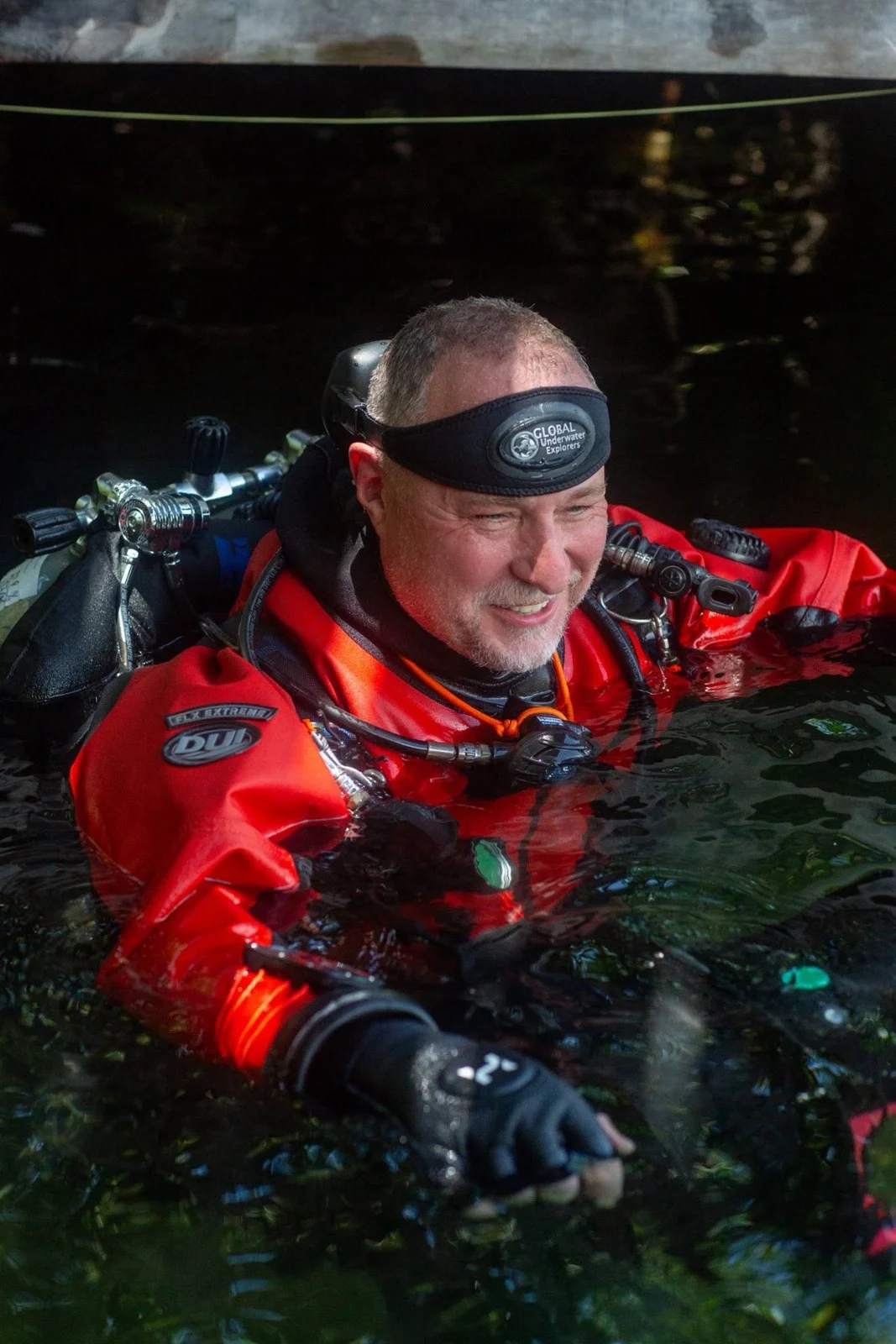
Your instructor: Alexander Vronsky
IANTD and IDF Instructor Trainer. IDF Course Director.
Alexander trains cave and technical divers, rebreather divers and the instructors who teach them, year-round, in the cenotes and caves of the Riviera Maya, home to the longest underwater cave systems in the world.
Cave and technical instructor trainer: Cavern to Technical Cave, Technical to Master Deep. CCR instructor: Dual CCR and Dual CCR Cave; GBM CCR from Nitrox to Trimix 100; S7 CCR from Nitrox to Helitrox; CCR Cave, CCR Technical Cave and CCR Expedition Cave on GBM, S7, SF2, JJ and Fathom. Authorized dealer for S7 and GBM rebreathers. TDI technical instructor.
GUE Member. GUE Cave 2, Cave DPV, Cave CCR, CCR 2, Tec 3.
Elected representative of CREER, the regional cave diving committee of Quintana Roo (Comité Regional de Espeleobuceo, Ecología y Regulación).
Alexander teaches the cave and technical courses himself, in English and Russian.
An engineer by training, Alexander ran large-scale technical and broadcast operations in telecom and for the Olympic Games before diving became his profession. That experience shows in how every course here is planned and run.